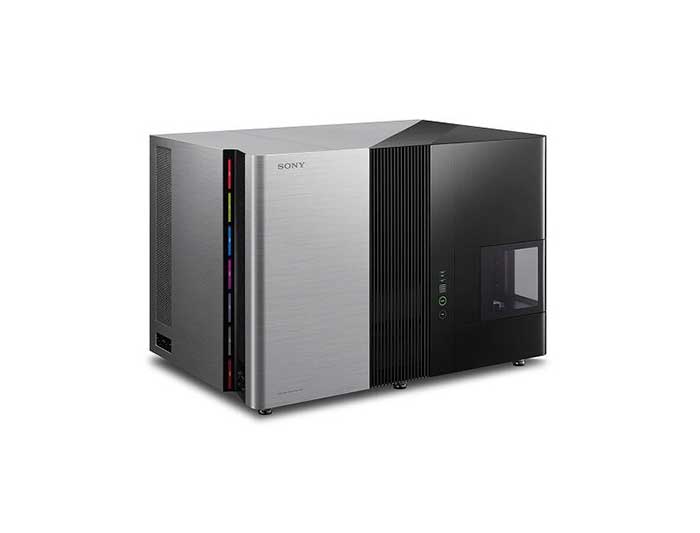
ID7000™ Spectral Cell Analyzer
Designed to Empower Deep Scientific Insights
The ID7000™ spectral cell analyzer supports high-parameter flow cytometry by delivering comprehensive information about heterogeneous cell populations, with high sensitivity to detect dim and rare populations.
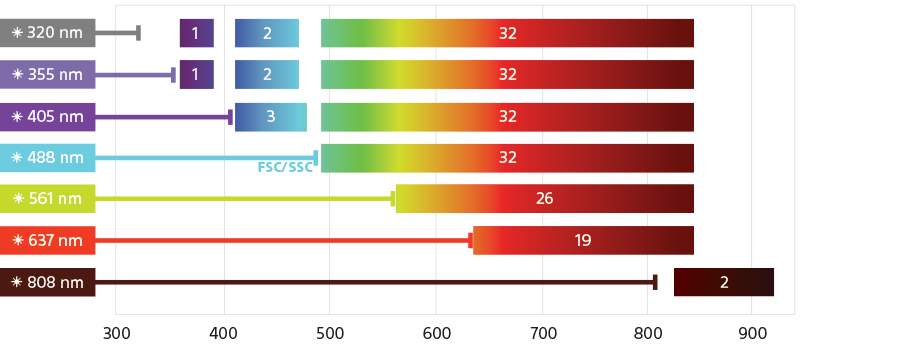
Expanding the capabilities of cell analysis, the ID7000 can be configured with up to 7 lasers and 186 detectors, the most of any flow cytometer available today. The system enables researchers to perform experiments using 44 colors or more, limited only by the fluorochromes available. Laser choices range from deep ultraviolet (320 nm) to infrared (808 nm). The system’s detection capability enables expansion of multicolor panels and can keep pace with future fluorochrome development.
The ID7000 spectral cell analyzer streamlines high-parameter experiments and multicolor workflows. Novel features, including the Spectral Reference Library, save time. The Autofluorescence Finder allows researchers to identify and subtract contributions to the signal from autofluorescent populations, thus ensuring higher fidelity of data and more accurate visualization.
Intuitive, guided workflows on the ID7000 spectral cell analyzer make multicolor flow cytometry accessible. Software wizards and tools simplify instrument controls from startup to shutdown, automate quality control, and optimize experiment creation. The standard AutoSampler provides walkaway operation and is equipped with a unique, active agitation capability to keep cells in suspension during sample acquisition.
Spectral technology, easy-to-use software, and automation across the workflow make the ID7000 an excellent fit for facilities looking for a user-friendly, high-performance analyzer that will bring their research to the next level.
Designed for Multicolor Workflows
The advanced optics design, along with other proprietary technologies included in the ID7000 spectral system, provide best-in-class data so that researchers can collect the most information from every sample. Sony has developed signal processing technologies to reduce electronic noise, central to achieving high sensitivity in a flow cytometer. Together, these capabilities help to deliver the sensitivity to help scientists achieve more accurate results.
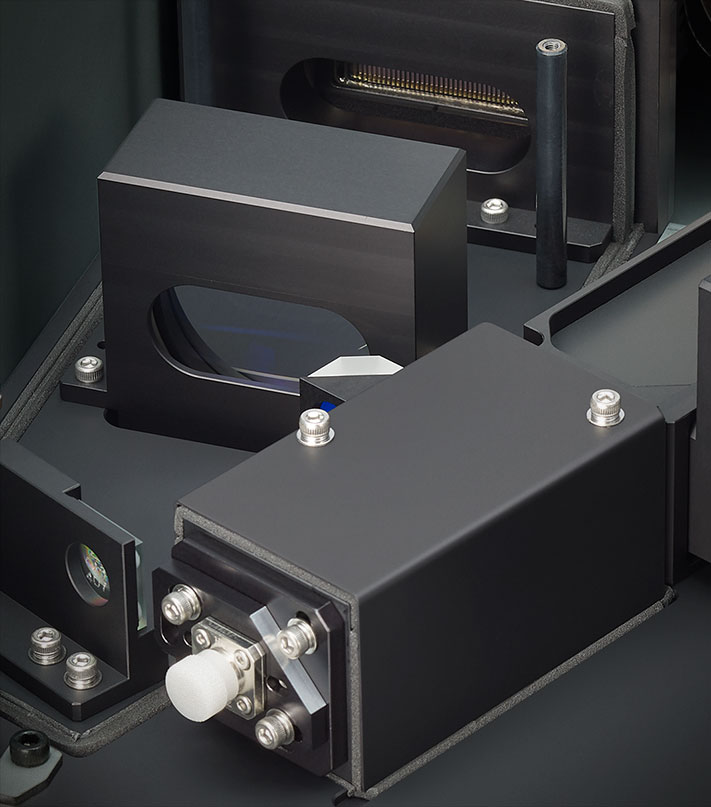
The new excitation and detection optics in the ID7000 allow users to select spectrally similar fluorochromes and resolve the signal with confidence, to gain a deeper understanding of cellular biology. As pioneers in spectral technology, we at Sony have designed the optics to unlock the full potential of spectral analysis, with an unparalleled number of lasers and PMT detectors that provide the resolution needed to unmix even the most similar spectral signatures.
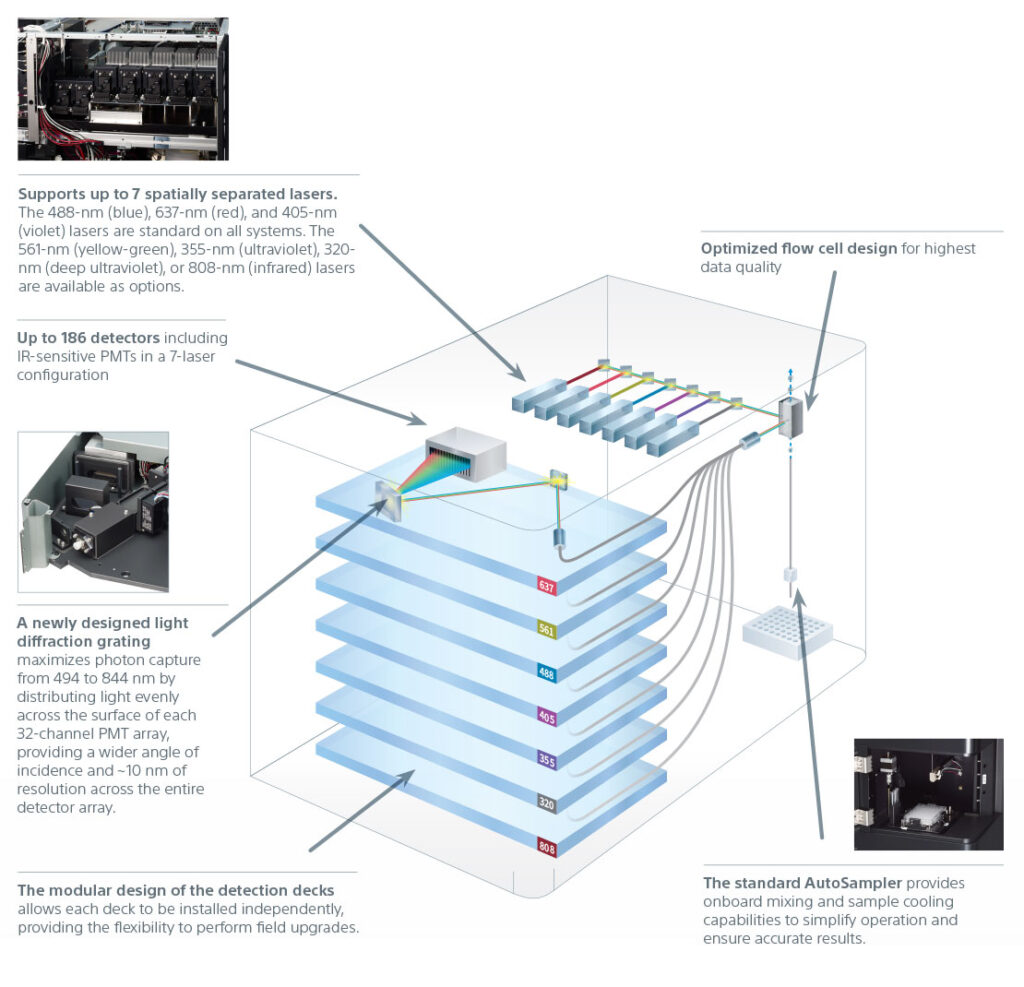
The excitation optics are designed to maximize fluorochrome excitation and emission across the detector array to deliver distinctly resolved populations. The system is equipped with three standard excitation lasers in all configurations: the 488-nm (blue), 637-nm (red), and 405-nm (violet) lasers. Optional 561-nm (yellow-green), 355-nm (ultraviolet), 320-nm (deep ultraviolet), or 808-nm (infrared) lasers support a wide variety of applications. Each excitation laser has power specifications optimized to deliver the highest performance for detecting dim and rare markers.
The expanded detector availability addresses the complexity of panel design, and in turn fluorochrome choices, which empowers discovery. Photomultiplier tubes (PMTs) have been chosen for their high signal-to-noise performance to capture the most photons, leading to higher resolution and lower background, enhancing dim signal detection for superior visualization of rare populations.
Emitted light is collected from 360 nm to 920 nm using PMTs (32-channel, single-channel, and single-channel IR-sensitive), and a spectral fingerprint is generated. A light diffraction grating based collection system maximizes photon capture across the entire spectrum by distributing light evenly across the surface of each of the 32-channel PMT arrays. This new, robust system provides high resolution across the entire detector array for a larger, more evenly distributed detection range, and minimizes light loss.