
TissuePro 3D BioPrinter
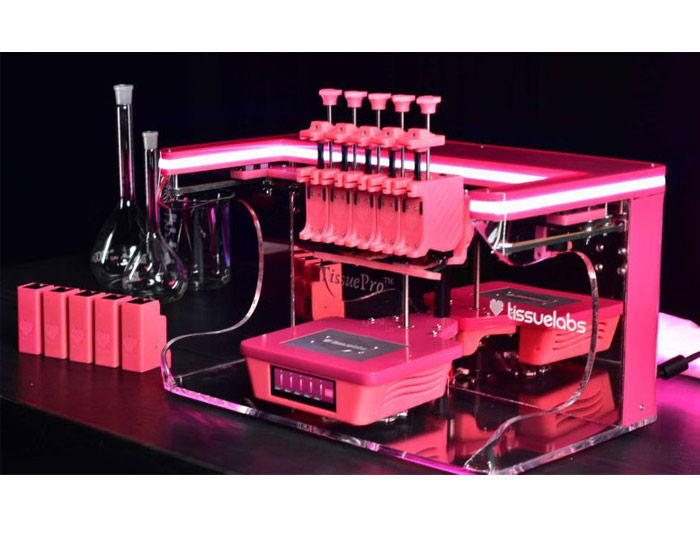
The ultimate extrusion 3D bioprinter
TissuePro™ is TissueLabs’ advanced extrusion bioprinter, designed for cutting-edge scientists working on complex multi-material tissue fabrication. It features five independent piston-driven microextruders with 0.1 µL precision and the proprietary Mixtrusor™ technology, enabling the seamless combination of multiple biomaterials through continuous coaxial and triaxial printing to create intricate tissue constructs. With micron-level resolution, five photocuring wavelengths (from UV to infrared), and full temperature control from 4°C to 60°C across both printheads and printbed. TissuePro™ is available as a research-use-only instrument.
5 High-Precision Volumetric Extruders
Five piston micro-extrusion printheads with a 0.1 μL volume step through a syringe for enhanced precision. No need for optimizing pressure!
Multi-material, Coaxial, and Triaxial Printing
Two independent printheads allow printing with different biomaterials in the same structure or to perform seamless co-axial and triaxial printing.
Mixtrusor™ Mixing System
The Mixtrusor™ mixing system enables precise bioink blending for complex, multi-material 3D structures, enhancing versatility and control in biofabrication.
Photocrosslinking (from UV to IR)
Built-in photocrosslinking system, featuring five wavelengths, from UV to infrared: 365nm, 405nm, 450nm, 530nm, and 810nm.
Heating and Cooling for Material Flexibility
Heating and cooling on both the printheads and the printing bed, allowing users to work with a wide range of materials at controlled temperatures.
Automated Calibration for Multi-Head Printing
Automatically calibrates XY offsets and comparative Z levels for precise multi-head alignment and optimal print accuracy.
Tissue Engineering
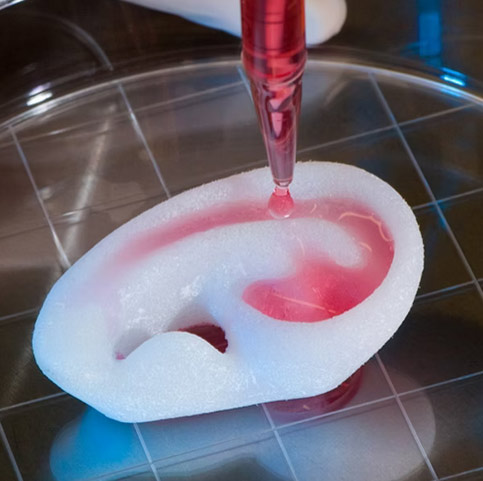
TissueStart™ allows researchers to create intricate 3D scaffolds and tissue models that closely mimic the structural and functional properties of human tissues. This capability is crucial for advancing regenerative medicine, as it enables the development of tissue replacements for damaged or diseased organs. By providing a platform for the precise placement of cells and biomaterials, TissueStart™ facilitates the study of cell behavior, tissue growth, and the development of vascularized tissues, which are essential for creating functional tissue grafts that can be used in clinical settings.
Material Sciences
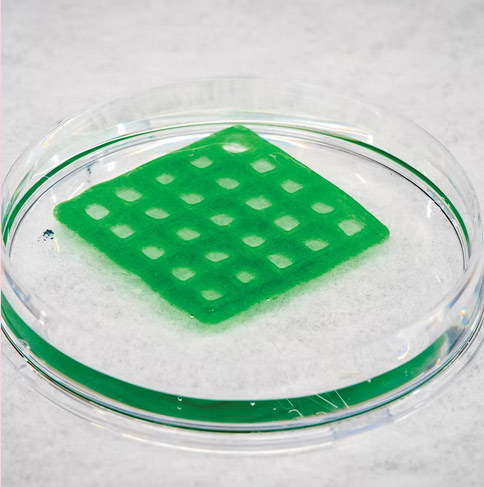
In material sciences, TissueStart™ plays a critical role in the exploration and development of novel biomaterials. The bioprinter’s precision helps scientists study materials with specific properties, such as enhanced biocompatibility, mechanical strength, and controlled degradation rates. These materials can be tested for their interactions with biological systems, leading to innovations in medical implants, wound healing applications, and drug delivery systems. Additionally, TissueStart™ enables the study of how different materials can be combined or structured at the microscale to create composites with unique properties, advancing the field of biomaterials science.
Drug Development
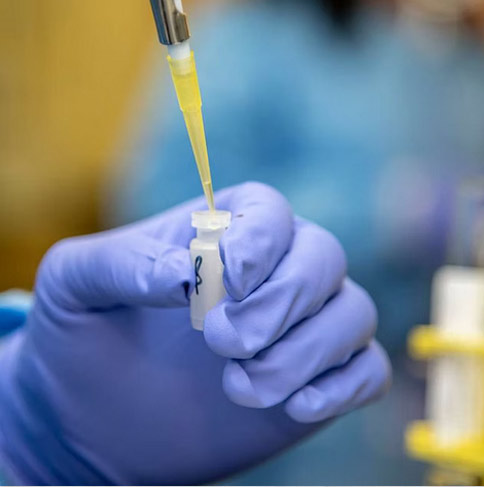
TissueStart™ is revolutionizing drug development by enabling the creation of sophisticated 3D organoid models that better replicate the complex architecture and microenvironment of human tissues. These models provide more accurate predictions of how drugs will behave in the human body, reducing the reliance on less predictive 2D cell cultures and animal models. By using TissueStart™ to print multiple types of tissue, researchers can create interconnected systems, such as liver-heart-kidney networks, which allow for comprehensive toxicity and efficacy testing of new drug candidates. This approach not only improves the precision of drug testing but also has the potential to significantly shorten the drug development timeline and reduce costs.
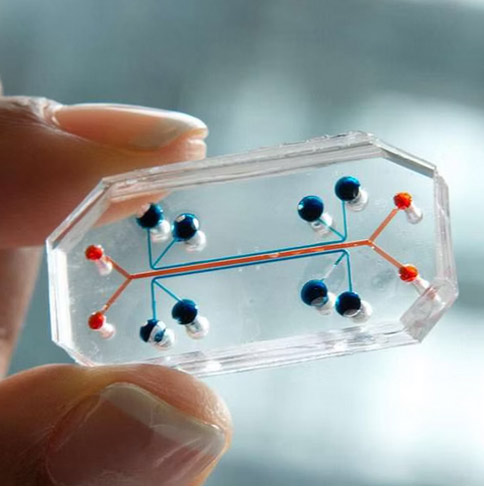
Organ-on-a-chip
TissueStart™ is integral to the development of organ-on-a-chip systems, which are small devices containing human cells that simulate the functions of real organs. These chips are used to model diseases, study drug responses, and understand organ interactions in a controlled environment. TissueStart™ enables the fabrication of the microfluidic channels and cellular architectures needed for these chips, providing a powerful tool for researchers to investigate how organs respond to different stimuli, how drugs are metabolized, and how diseases progress at the cellular level. This technology holds the promise of reducing the need for animal testing and providing more accurate models of human physiology.

Cultured Meat
In the field of cultured meat production, TissueStart™ offers the capability to bioprint complex structures that closely mimic the texture, taste, and nutritional content of traditional meat. By layering different types of cells and biomaterials, TissueStart™ can replicate the marbling, muscle fibers, and fat content that give meat its characteristic qualities. This technology not only addresses ethical concerns related to animal farming but also offers a sustainable alternative to meat production, with the potential to reduce the environmental impact of livestock agriculture. As technology advances, bioprinted meat products can be customized to meet specific dietary needs, such as higher protein content or added vitamins, making cultured meat a versatile and healthier option for consumers.
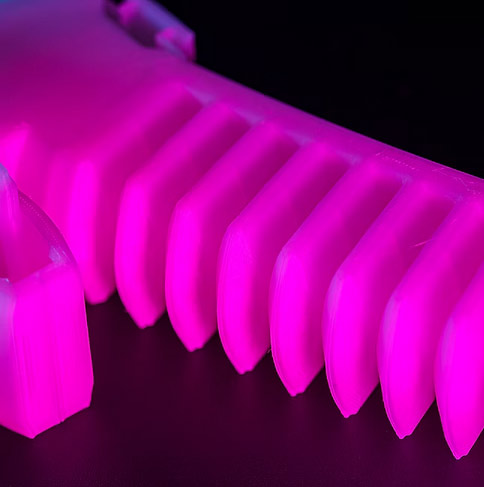
Soft Robotics
TissueStart™ is instrumental in the emerging field of soft robotics, where it is used to fabricate flexible, bio-inspired components that can be integrated into robotic systems. These components, made from soft, tissue-like materials, allow robots to perform delicate tasks, such as interacting with humans or handling fragile objects, in ways that traditional rigid robots cannot. The ability of TissueStart™ to print materials with varying mechanical properties enables the creation of actuators and sensors that mimic the movement and responsiveness of biological tissues, leading to more adaptive and lifelike robotic systems. This technology has applications in medical devices, rehabilitation, and even in the development of robots that can navigate complex environments by mimicking the flexibility and adaptability of living organisms.
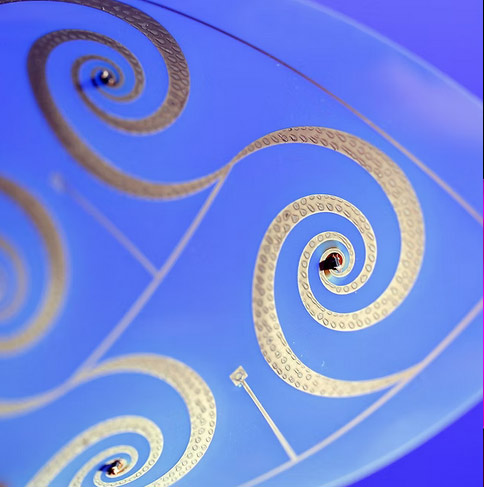
Eletronics
TissueStart™ is also capable of printing non-biological electronic components such as printed circuit boards (PCBs) and other electronic structures. This versatility allows researchers and engineers to explore the integration of electronics with biological systems, enabling the creation of hybrid devices that combine the advantages of both. The ability to fabricate electronics in custom shapes and sizes opens up new possibilities in the design of innovative electronic devices, such as flexible displays, smart textiles, and compact, high-performance circuits. By bridging the gap between biology and electronics, TissueStart™ supports the development of next-generation bioelectronic devices that can monitor, diagnose, and treat medical conditions in real-time, as well as innovative consumer electronics that adapt to the user’s environment and needs.
Technical specifications
- Printheads : 5 independent piston-based microextruders
- Compatible syringes : 3 mL and 5 mL
- Theoretical volume unit step : 0.1 µL
- Printhead flow rate range : 1 – 50 µL/sec
- Surface compatibility : Petri dishes, slides, and multi-well plates.
- Build volume : 127x85x80 mm (x,y,z)
- Photocuring system : 365nm, 405nm, 450nm, 530nm, and 810nm
- Printheads temperature : 4-60ºC *
- Printbed temperature : 4-60ºC *
- Calibration options : Manual and automatic
- Linear positioning precision : XY: 10µm | Z: 2.5µm
- Minimum layer thickness : 25 µm
- Software : TissueCloud™
- Supported file formats : .stl, .obj, .amf
- OS compatibility : Windows 10 or later
- Connectivity : USB-C
- Power supply : Input: 100-240VAC, 50/60Hz, 2.0A Output: 12VDC, 10A, 120W
- Outer dimensions (DxWxH) : 540 mm x 330mm x 300mm
- Weight : 14 kg
* Minimum and maximum temperature ranges may vary depending on room temperature.